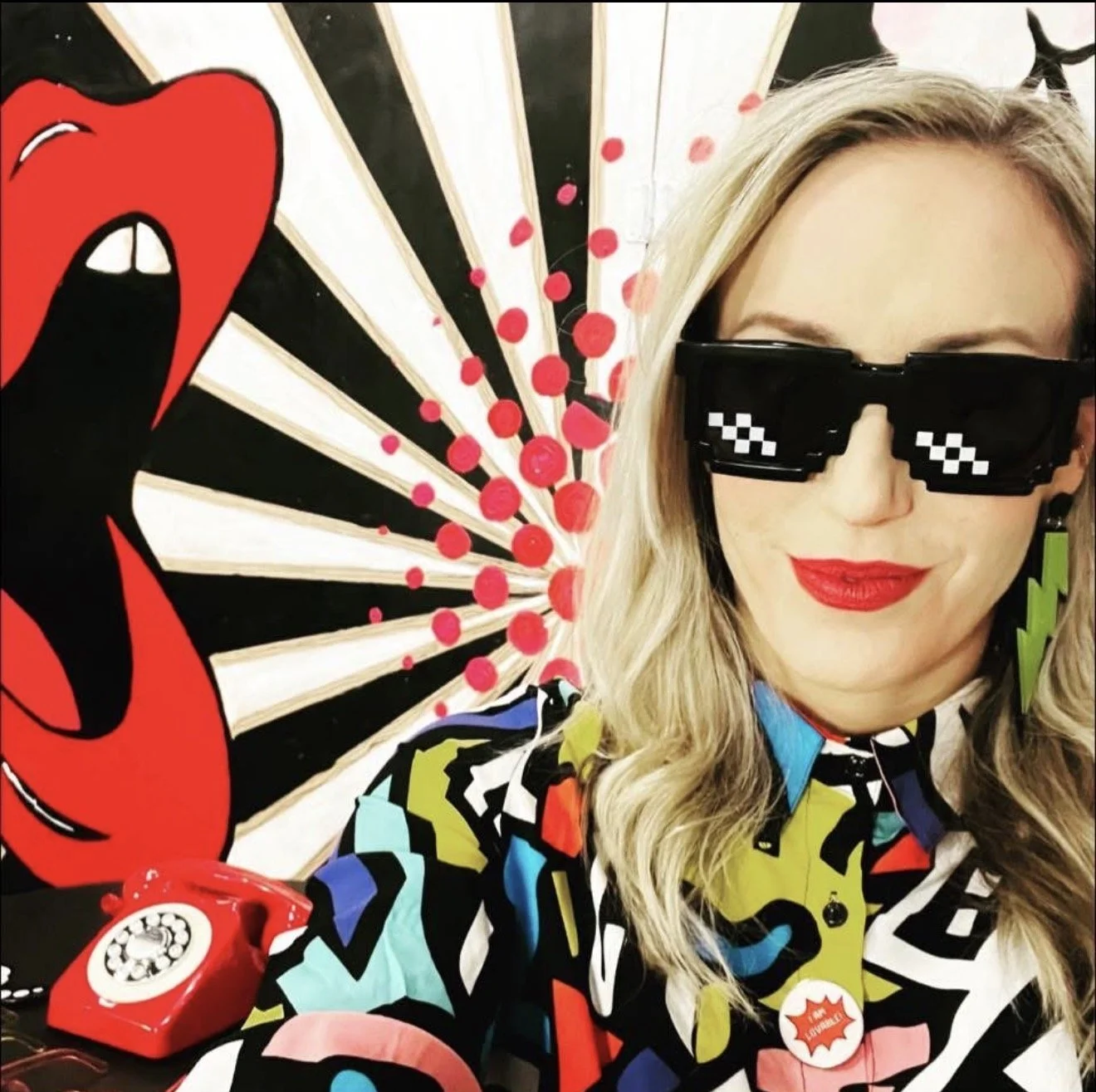
Our March TWR of the Month is…

Ryan Freeman-Burchfield!
1) What is your name and your current job title? My name is Ryan Freeman-Burchfield and I am a Certified Beck Cognitive Clinician and the CEO of the Freeman-Burchfield Institute for Cognitive Behavioral Therapy (FBCBT).
2) How did you come to hold your current position? I had always wanted to visit the
Beck Institute for Cognitive Behavioral Therapy, while Aaron Beck was still alive. In 2017, a friend arranged the trip as a birthday gift, and I witnessed Aaron Beck speak about the Eagles and CBT. That experience deepened my passion for Cognitive Behavioral Therapy and evidence-based care. It was there that I knew I wanted to build a specialty practice alongside like-minded clinicians; one focused not only on delivering excellent treatment, but on continually training, collaborating and growing together.
That vision became the Freeman-Burchfield Institute for Cognitive Behavioral Therapy in Rogers, Arkansas, founded with a clear mission rooted in high-quality, evidence-based clinical care and professional training.
3) What called you into becoming a therapist or MH professional? I often feel an immediate urge to give a professional answer about why I became a mental health therapist. But I know how healing it has been for me when others have shared their real stories, so I will share a little part of mine in the hope that it might help someone else feel less alone.
My mother died in a car accident when she was 25 years old. I was six, the oldest of four children. We were 6, 4, 3, and 2. My father was nine years older than my mother and struggling with addiction and time in and out of jail. He loved us as much as he could, but he was not able to care for us. We were separated and sent to live with different family members.
I grew up carrying deep grief in an unstable environment during the most formative years of my life. Through both nature and nurture I developed OCD, phobias, panic, anorexia and depression. Looking back, I imagine my father may have been trying to quiet similar pain in himself. He overdosed when I was 27.
He was an artist. He was funny, handsome, creative and sensitive. He had also experienced rejection and abandonment by a parent. He loved us in the ways he knew how and to the extent he was capable. But for a child, that was not enough. I love him and I forgive him. I love both my parents and I am thankful they are mine.
Over time, I have learned something important about myself. I cannot work with severe substance abuse. It is too triggering for me. I also find that sitting with acute, heavy grief can bring up a sense of sadness and panic that makes it harder to stay fully grounded in the room. Maybe that means I still have healing to do. I do believe my growth will be lifelong. I also believe it is healthy and ethical to know our limits.
What feels steady and clear for me is treating OCD, phobias, social anxiety, panic disorder and depression using evidence-based approaches like ERP and CBT. This work does not trigger me. It feels focused and purposeful. I am careful to apply interventions in the ways research shows they are most effective, while also honoring each person’s individual story.
So, to answer the question I became a therapist to understand, to heal and to help others. I did not want to repeat my father’s life or pass on unhealed pain to my own children or to the people who love me. I wanted a healthier life. I wanted to know love, meaning and purpose. It is a real honor to walk alongside others as they work toward something different for themselves and build lives that feel different from the pain they came from.
I feel super lucky to be where I am today, but My dad would say, “There’s no such thing as luck.” And he may be right. But maybe there’s just a little bit of it, too…along with hard work, intention and lots of hope.
4) What is your favorite part about your job? The most difficult? My favorite part of this work is witnessing healing in its many quiet forms. It lives in the subtle shifts…a softening of shoulders, a deeper breath, the gentle change in someone’s expression when they realize they are being seen, heard and met with undivided presence. There is something sacred in that moment of recognition and validation. It is extraordinary to witness and it makes every long demanding day not only worth it, but meaningful.
The most difficult part of this work is sustaining the energy it takes to show up the way I want to for every person I care about serving. I am naturally introverted and live with my own human struggles
and when I am present, I am fully present. I feel deeply. I carry deeply; and because of that, my tank can run lower than I wish. Learning to protect my energy and to honor both my capacity and my limits is a daily practice.
5) What would you share with someone who wanted to become a therapist or to do your specific job? I would encourage them to get into therapy themselves, and to meet with several therapists to ask them all about their pros and cons.
6) Any final thoughts for the community??
Thank you!! Thank you TWR for choosing work that asks so much of you, yet still showing up with compassion. The world needs helpers who truly care. We hold stories. We hold hope. We hold space for pain and possibility all at once. That is no small calling. May we continue to anchor ourselves in integrity and compassion, and may we extend to ourselves the same grace we offer our clients.