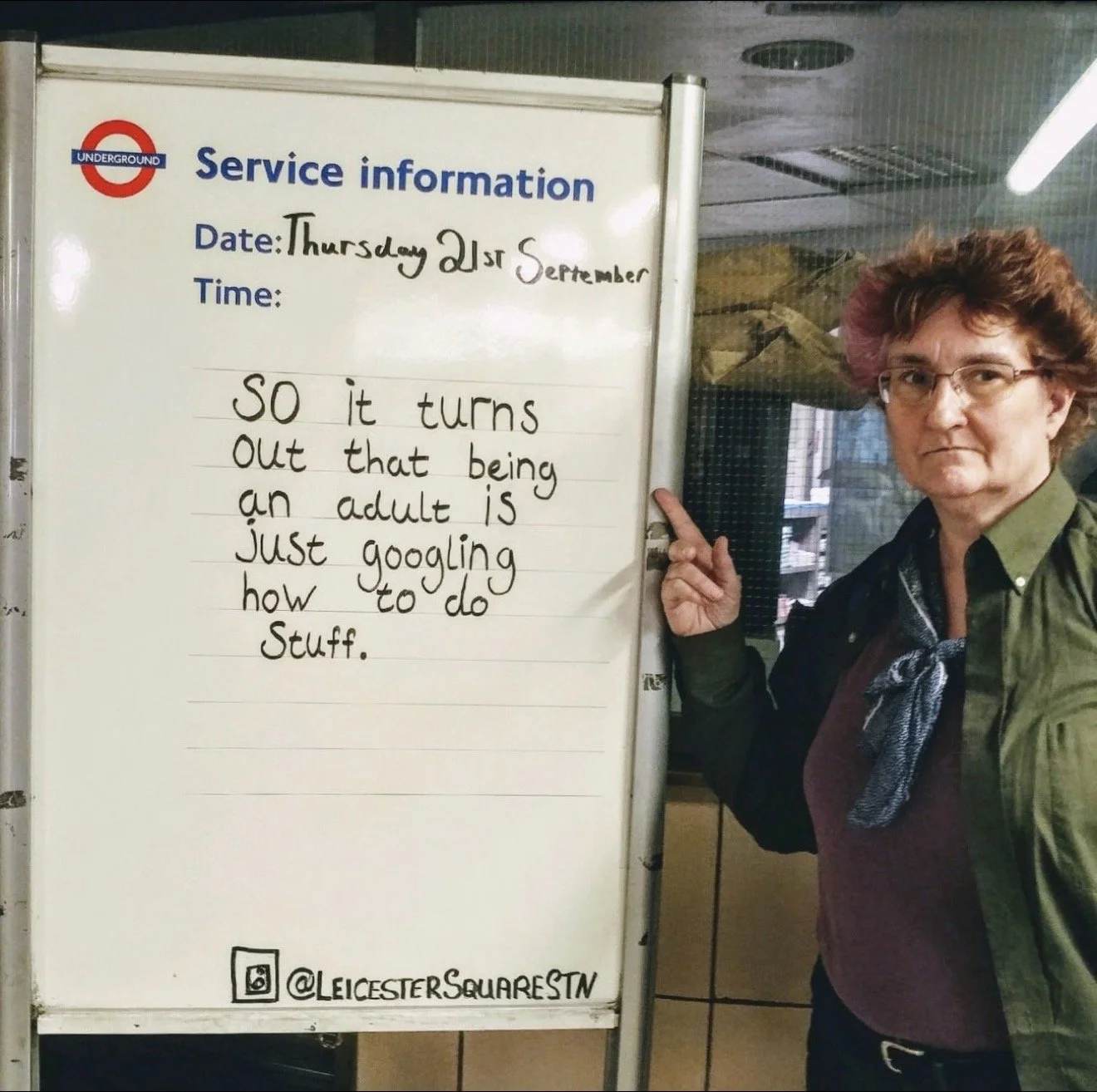
Our TWR this Month is Ruth Czirr!
1) What is your name and your current job title?
Ruth Czirr, Psychologist. I retired in 2016 after 30 years at Professional Counseling Associates. Now I do random consultation on TWR, and teach guided journaling.
2) How did you come to hold your position?
During internship and dissertation hell, I spent 5 years in a big VA Medical Center in California. Once I got my first license, I searched nationally and in 1986 came to PCA (at that time, a 3-county, 7-clinic nonprofit CMHC based in Little Rock).
My entry job was clinical, but I volunteered for a few chores (eg, updated policies, built a couple of little databases). A year later the CEO created a role (“Director of Quality Control”) and said my mission was to “Keep us out of court, and off of 60 Minutes.” I did clinical supervision and risk management, worked with lawyers, created forms, coordinated between locations and departments. Basically became the utility player who researched new issues as they appeared (eg, Medicaid, state programs, CARF, Corporate Compliance, coding and data management, HIPAA.).
Arkansas and PCA felt like the right size for me - big enough to have important problems, small enough to get to know people and systems. There were periods that were painful, scary, and overwhelming, but on balance I had amazing coworkers and felt lucky to have built my job.
3) What called you into becoming a therapist or MH professional?
My mom’s family was saturated with depression and hidden traumas. Had lots of relatives who “weren’t right,” a few who “went mental,” and I was one of the girls who were “too smart for their own good.” I grew up moving around the USA, being the weird kid and worrying whether I would go mental, too. I was very curious what work a smart woman *could* do, but MH professions weren’t on my radar at all. (I was born in 1954, and these were the “good old days” when lots of information was hard to get ahold of.)
In college I blew through several tentative majors. One great Women’s Studies elective was primarily Social Psychology, which clued me that Psychology wasn’t just “Freud or Skinner.” The graduate Psych Dept ran a clinic, and I decided to ask for help there for a tangle of problems. My assigned therapist was an expert - tenured professor, yay! But at the end of the first session with him, I felt bewildered and completely un-heard. (Money quote, in a patronizing tone: “Why do you call this ‘a problem’? Why does this seem to… bother you?”) Walking away, a Moment of Clarity hit me: I wondered, “Would he have reacted that way if a guy had said the same things I just said?” and then, “Even *I* could do better than this!”
Got my doctorate was a cross-major in Clinical and Community Psych, and I interned in an Interdisciplinary Team VA program – so I fit better with some of my Social Work or Nursing cousins than with some of my Psychology brethren.
4) What is your favorite part about your job? The most difficult?
It’s absorbing and satisfying to untangle a problem. And information is delicious – I love to pass tools, resources, and mental models to people who can use them.
It’s painful to break the news that a program doesn’t exist, no spaces are open, a person can’t qualify, nobody will pay, or the rules don’t make logical sense. It’s painful to watch programs get smashed or starved that took years of work to build.
5) What would you share with someone who wanted to become a therapist or to do your job?
Get past your perfectionism. Learn to tolerate being a fumbling beginner, so you can keep mastering new things. “Don’t waste your pain” – when you fail or get bruised, demand to learn as much as you can from that experience.
Stay alert for allies, teachers, mentors –and not *just* the gurus in your own profession. Compare notes. Read widely. Build your networks. Ask for help. Curiosity, humility, and respect for what others know are all valuable, and together they’re a superpower.
Protocols and branded tools can teach you a lot, but all of them have limits and drawbacks. There’s no tool that works for every situation. (So, always ask a new client what they’ve tried already.) Collect great questions, and learn how to unpack what a person means by their words.
Notice the infinite ways that people are different from you. Learn about triangles, systems, families, patterns, meta, contexts. Learn to shift your perspectives and click through several points of view to build your working story.
6) Any final thoughts for the community??
I love this community, and we need each other. As Wendell Berry says, “We hurt, and are hurt, and have each other for healing. It is always healing, it is never whole.”
I made this refrigerator magnet 20 years ago and still refer to it. (Each point is a chapter in Bolen’s little book.) Clip and share!
Conduct Becoming a Crone
1. Don't whine.
2. Have vitality.
3. Foster growth.
4. Trust what you know in your bones.
5. Meditate in your fashion.
6. Be fierce about what matters.
7. Choose the path with heart.
8. Speak truth with compassion.
9. Listen to your body.
10. Improvise.
11. Don't grovel
12. Laugn togeter.
13. Savor the good in your life.
Jean Shinoda Bolen
Crones Don't whine"